Guide · 7 min read
Chef Uniforms Guide: From Chef Jackets to Kitchen Aprons
Chef uniforms are functional garments that should be chosen with the heat, pace and hygiene requirements of the kitchen in mind. In this guide, we have gathered everything you need to know when dressing your kitchen team, from the role of the chef jacket to choosing aprons and headwear, and from distinguishing ranks to embroidery.
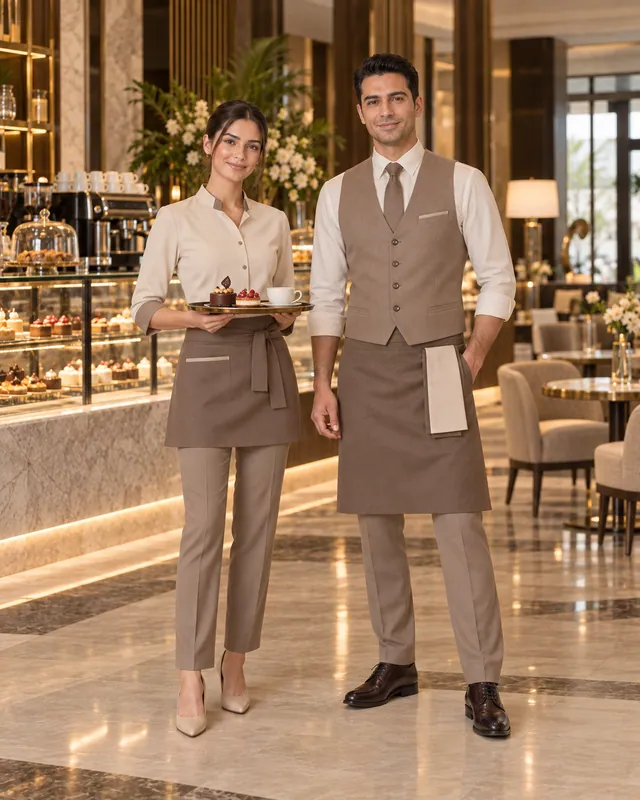
Why chef uniforms are more than just workwear
A professional kitchen means high heat, steam, sharp tools, hot liquids and a relentless pace. Chef uniforms are a traditional set of solutions shaped to protect the team working in these conditions, support hygiene standards and provide comfort through long services. Behind each classic piece, whether the white chef jacket, checked trousers or a long apron, lies a functional reason. Breathable fabric, a cut that does not restrict movement and pieces that withstand frequent washing are the basic conditions for comfort in the kitchen.
Today, the role of kitchen uniforms goes even further. Open-kitchen restaurants, show cooking stations and live cooking areas in hotels bring the kitchen team right into the guest’s view. This makes kitchen team uniforms a visible part of the business’s corporate identity. A well-chosen chef jacket carries both the chef’s comfort and the business’s professional image.
What a chef jacket does: the logic of the double-breasted cut
The double-breasted front of the classic chef jacket is not an arbitrary design choice. The two overlapping layers of fabric across the chest create an extra layer of protection against heat and hot splashes at the stove. And because the front of the jacket can be buttoned the other way, a surface stained during service can easily be hidden, allowing the chef to step out in front of guests looking clean.
The collar follows the same functional logic. A high, closed collar protects the neck from heat and splashes while also absorbing some sweat. The collar style also defines the jacket’s character: a classic stand-up collar offers a traditional kitchen look, while softer, simpler collars create a modern feel in open kitchens.
Long sleeves protect the arms from hot surfaces and splashes; many chefs prefer to roll them up to the elbow. For very hot kitchens, short-sleeved styles, ventilation panels or lighter fabrics are also worth considering. When choosing a chef jacket, we recommend paying attention to the following features:
- Double-breasted front: Double-layer protection and the option to hide a stained surface
- Sleeve length: Long sleeves protect, short sleeves keep you cool; choose according to the kitchen’s temperature
- Closures: Buttons that open and close easily and withstand frequent washing
- Breathability: Breathable fabrics or ventilation details for hot kitchens
- Cut: A relaxed fit that does not restrict arm and shoulder movement or cling to the body
Choosing trousers, aprons and headwear
Chef trousers are the foundation of comfort for a team that stands for long hours and is constantly on the move. Styles with an elasticated or adjustable waist, a loose cut and breathable fabric are generally preferred. Checked or dark trousers have long been common in kitchens because they show stains less. Leg length matters too: hems that drag on the floor pose both hygiene and safety risks, so choose a length that sits cleanly above the shoe.
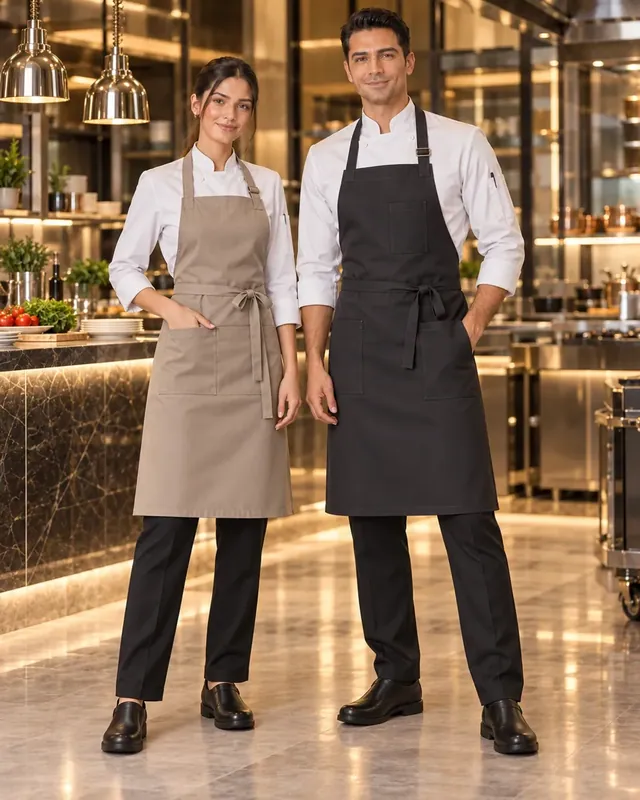
The kitchen apron is a layer that protects the jacket and trousers from stains and can be changed during the day when needed. A bib-style chef apron protects most of the body, while a waist apron offers lighter wear and creates a stylish silhouette, especially in open kitchens. When choosing, pay attention to an adjustable neck strap, waist ties of sufficient length and the weight of the fabric; an overly heavy apron may offer protection but can quickly become tiring in a hot kitchen. For headwear, options include the traditional chef’s toque, caps, hair nets and bandanas. Whichever you choose, the core purpose is hygiene: keeping hair away from food.
Visually distinguishing the head chef from the team
Professional kitchens run on a clear hierarchy. Being able to tell positions such as executive chef, sous chef, chef de partie and commis apart speeds up communication during busy service and presents an orderly look in front of guests. This distinction can be created with small but noticeable details without breaking the team’s cohesion. The aim is to show at a glance who runs the kitchen, while bringing the rest of the team together under one disciplined look.
In large hotel kitchens, assigning a separate apron shade to sections such as pastry or the cold kitchen also makes coordination between teams easier. The main tools you can use to create this distinction are:
- Color: A color hierarchy such as black or anthracite for the head chef and white jackets for the team
- Piping and details: Contrast piping on the collar, cuffs or button line
- Buttons: Buttons in a different color or material on the head chef’s jacket
- Embroidery: Clear position information with the title embroidered beneath the name
Name and logo embroidery on chef jackets
Embroidery is the most lasting and elegant way to personalize chef uniforms. The logo is usually embroidered on the left chest, with the chef’s name and title below the logo or on the right chest. Some businesses complete the look by adding a small brand detail on the sleeve. The size and thread color of the embroidery should harmonize with the jacket’s color: on a white jacket, embroidery in a dark or corporate color reads clearly, while on a black jacket, tone-on-tone or light-colored embroidery leaves a more sophisticated impression.
Because kitchen uniforms are washed frequently and usually at high temperatures, the embroidery must also be able to withstand these conditions. Making embroidery decisions on a sample lets you see how the size and placement look on the actual jacket. Defining embroidery placement as a single standard for the whole team ensures that new hires’ uniforms look exactly the same as those of the existing team.
Hygiene, washing and a spare-set plan
In the kitchen, clothing is the first line of defense for hygiene. That is why chef uniforms must be clean at every shift, and aprons that get soiled during the day must be quick to change. As a general approach, fabrics that are suitable for high-temperature washing, dry quickly and keep their shape are preferred. White jackets remain the strongest symbol of hygiene because they make cleanliness visible; however, colored jackets can also look good for a long time with the right washing routine.
How many sets each person needs depends on the shift pattern, how busy the kitchen is and whether washing is done in-house or outsourced. Hotels with their own laundry can work with fewer spares because clean garments come back faster, while businesses using an external laundry service need to keep this margin wider. The following practical steps offer a good starting point:
- Plan at least one spare jacket and pair of trousers per person
- Keep enough aprons on hand to change them during the day
- Make headwear standard for the whole team
- Share washing and ironing instructions with the kitchen team and, where applicable, the laundry
Project-based kitchen uniforms with Cucina
Every kitchen is different: a hotel’s large main kitchen, a boutique restaurant’s open kitchen and a patisserie’s production area do not share the same needs. That is why Cucina, Rapsodi’s kitchen and chefwear collection, works on a project basis rather than through ready-made product pages. After listening to your kitchen’s conditions, team structure and corporate identity, we determine jacket, trouser, apron and headwear options together with you. Günay Triko’s textile experience, built up since 1984, brings a perspective that ensures these choices suit everyday kitchen conditions.
You can choose fabrics from a swatch card, shape color and contrast piping details around your corporate identity, and finalize logo and name embroidery at the sample and fitting stage. You can also easily derive your team’s size breakdown from your staff list with our size planning tool. If you are considering kitchen uniforms designed exclusively for your brand, explore our custom design process, or share your team structure and requirements to build your quote list.
Frequently asked questions
Why are chef jackets double-breasted?
The double-breasted front creates two layers of fabric across the chest, providing extra protection against heat and hot splashes. And because the front of the jacket can be buttoned the other way, a stained surface can be hidden, allowing the chef to appear before guests looking clean.
What color should a chef jacket be?
White is the classic choice because it makes cleanliness visible. That said, jackets in black, anthracite or corporate colors are also a good option, especially in open kitchens and when you want to distinguish ranks within the team. What matters is that the color fits your business’s overall visual language.
Is there a difference between a kitchen apron and a service apron?
Yes. A kitchen apron is used in an environment with direct exposure to heat and heavy stains, so wide coverage and durability come first. With a service apron, appearance in front of guests, silhouette and branding are the more decisive factors.
How can I see the products in the Cucina collection?
Cucina is a project-based collection, so its products are not listed on individual pages. When you share your kitchen team’s requirements through a quote list, suitable jacket, trouser, apron and headwear options are determined together with you and finalized at the sample and fitting stage.