
Guide · 7 min read
Housekeeping Uniforms: A Uniform Guide for Your Room Attendant Team
Housekeeping uniforms are a working tool worn all day by the hotel team with the most physically demanding pace. In this guide, we explain how to make the right decisions on room attendant uniforms, from freedom of movement and frequent washing to tunic cuts and distinguishing supervisors.
Why housekeeping uniforms call for specialist expertise
Housekeeping is one of the most physically demanding departments in any hotel. Making beds, pushing heavy carts, bending down to clean bathrooms and walking the corridors all day require clothing that works with every movement. That is why housekeeping uniforms should be designed with a different order of priorities than front office or management uniforms: movement and durability first, appearance second. Room attendants also frequently come into contact with cleaning products and damp environments, which directly affects fabric and color choices.
This does not mean appearance takes a back seat. Room attendants often cross paths with guests in corridors, in elevators and at room doors, and these brief encounters directly shape how guests perceive the hotel’s standard of cleanliness. A neat housekeeping uniform in harmony with your corporate colors is a visible assurance of work that usually goes unseen.
Freedom of movement: the hidden importance of the cut
A good room attendant uniform should not expose the back when the wearer bends down, should not pull at the shoulders when the arms are raised, and should not feel tight over long hours. The tunic is the most popular form for these needs: with a length that covers the hips, side slits and a relaxed sleeve cut, it offers both freedom of movement and a neat silhouette. Using separate patterns for women and men ensures that both groups feel comfortable.
When choosing a pattern, you also need to account for the size diversity of the team. Close-fitting cuts may look stylish in a catalog photo, but in a real housekeeping team they may not offer everyone the same comfort. A tunic with a slightly loose, straight fall, planned across a wide size range, maintains the same neat look on different body types.
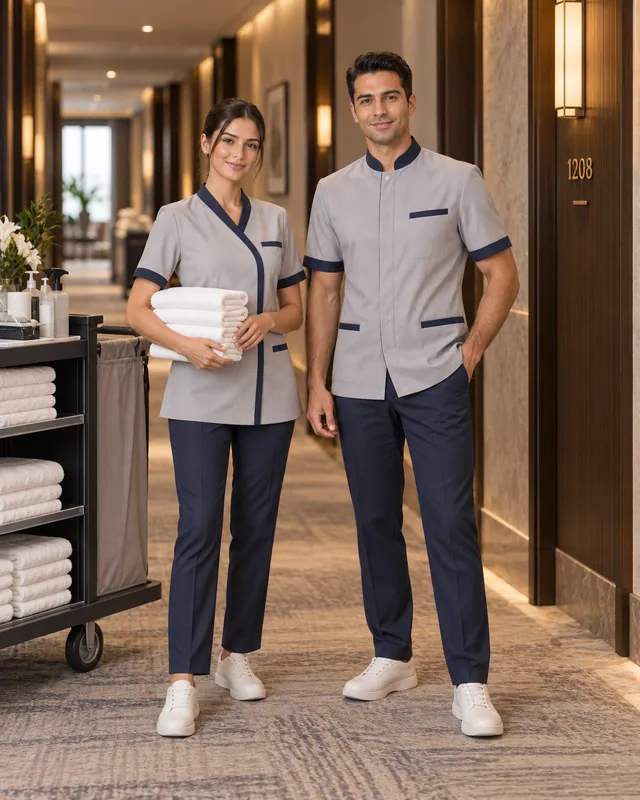
When reviewing tunic styles, a good starting point is to look at options with separately designed women’s and men’s cuts, such as the Governante women’s tunic and the Governante men’s tunic. When evaluating the cut, we recommend paying attention to the following points:
- Length: Long enough to cover the back and waist when bending
- Side slits: Freedom of movement when walking and crouching
- Sleeve cut: A relaxed shape that does not strain the shoulders when the arms are raised
- Closures: Durable buttons or snaps that open and close easily in daily use
- Pockets: Easy-to-reach placement for key cards, pens and small items
Wash durability and fabric selection
Housekeeping uniforms are among the most frequently washed garments in a hotel. In many hotels, these pieces are washed at high temperatures in industrial machines, which means the fabric must be able to retain both its color and its shape. As a general approach, fabrics with high colorfastness that dry quickly and need little ironing are preferred. Breathability should not be overlooked either, especially for teams working in the summer months and in areas with limited ventilation.
Color choice is also part of durability. Medium and dark colors such as gray, anthracite, navy and earth tones tolerate the stains and wear of daily use better. Very light tones offer a fresh look but may need replacing more often. Before deciding on fabric, comparing a few alternatives on a swatch card and, if possible, assessing the sample after several washes is a sound method.
Contrast piping and color: a practical yet stylish identity
One of the most effective details that sets a housekeeping uniform apart from ordinary workwear is contrast piping. Fine piping on the collar, pocket openings or cuffs connects a simple tunic to the hotel’s corporate identity. Navy piping on a gray tunic, for example, creates a look that is both calm and polished; if your corporate color is burgundy, olive green or turquoise, it can be carried across the entire housekeeping team through this detail. Piping that does not fade with frequent washing or bleed into the main fabric is what determines how long this detail lasts.
The combination of piping, buttons and color is also a practical way to build a shared visual language with the front office, service and spa teams. A small detail repeated across all departments turns garments in different cuts and colors into parts of one corporate identity. You can see examples of this approach in the Governante collection.
Trousers and footwear: the supporting pieces
No matter how well the tunic is designed, if the trousers are uncomfortable, the team will feel it by the end of the day. For housekeeping, cuts with a fully or partially elasticated waist that leave room for movement at the knees and hips and allow crouching should be preferred. Governante trousers in the same color as the tunic or one shade darker create a cohesive look while also showing stains less. In hotels that stay open year-round, planning lighter-weight options for the warm months and heavier fabrics for the cooler months increases comfort.
Footwear, even if it is not an official part of the uniform program, should be defined as a standard. Non-slip soles for wet floors, closed toes and a supportive construction suited to long hours on one’s feet are important for both safety and comfort. Setting a single color standard for the whole team, such as black or navy, also completes the cohesion of the uniform.
Name badges, embroidery and distinguishing supervisors
The identification of room attendants also matters for guest security. Guests should be able to tell at a glance that the person knocking on their door is a hotel employee. There are two common methods for this: name embroidery on the chest or a removable name badge. For seasonal teams, name badges offer flexibility, while for permanent staff, name embroidery provides a more polished and lasting look. In both cases, embroidering the logo on the chest strengthens the sense of belonging to the company.
In the housekeeping department, being able to distinguish positions such as floor supervisor, supervisor and executive housekeeper from the rest of the team makes both operational coordination and communication with guests easier. This distinction can be achieved with a different tunic color, a change in piping color, a jacket instead of a tunic, or a more formal cut. What matters is that the distinction is clear yet consistent with the team’s overall look. Since supervisors often carry tablets, radios or keys, pocket placement and number can also be planned separately for these positions.
Size planning, spare sets and seasonal renewal
Housekeeping is one of the largest departments in most hotels, which gives size planning particular importance. Building a size–quantity matrix for each style from your staff list minimizes the risk of under- or over-ordering. Our size planning tool helps you prepare this breakdown. Planning more than one set per person because of frequent washing, and setting aside a small reserve for staff who will join during the season, also keeps operations running smoothly.
Keeping a record of the approved style, color, piping and embroidery details makes it easier to meet the needs of worn pieces and new employees to the same standard. Reviewing the condition of the uniforms at the end of the season and listing the pieces to be replaced also simplifies the next season’s reorder. Whether you are planning hotel housekeeping uniforms or cleaning staff uniforms for a facility, you can build your quote list with the styles and size breakdown, and together we can determine the best result for your team through the sampling and fitting process.
Frequently asked questions
Is a tunic or a dress better for housekeeping uniforms?
Today, many hotels prefer a tunic and trouser combination for its freedom of movement and practicality. A tunic is more comfortable for movements such as bending, reaching and crouching, and makes it easier to create a shared visual language for women and men on the team.
What colors should room attendant uniforms be?
Medium and dark colors such as gray, anthracite, navy and earth tones tolerate daily wear better. You can bring your corporate color into the uniform through details such as piping, buttons or embroidery.
How can floor supervisors and supervisors be distinguished from the team?
A different tunic color, a change in piping color, a jacket instead of a tunic or a more formal cut are common ways to signal level of responsibility. It is important that the distinction stays consistent with the team’s overall look.
Can names and logos be embroidered on housekeeping uniforms?
Yes. Logo and name embroidery are among the personalization options offered in corporate uniform projects. For seasonal teams, using name badges instead of name embroidery can be a flexible alternative.