
Guide · 8 min read
How to Choose Hotel Uniforms: A Comprehensive 10-Point Guide
The right hotel uniforms shape three things at once: your guests’ first impression, your team’s comfort throughout the day and the consistency of your brand. In this guide, we walk you step by step through the ten critical points to settle before you start purchasing hotel staff uniforms.
Why hotel uniforms are more than a purchasing line item
The moment a guest steps into your hotel, they form an impression of your property through the appearance of your team, long before they see their room. The doorman’s coat, the fit of the front desk jacket, the apron worn by the restaurant server: they should all tell the same story. That is why hotel uniforms should be treated not as an ordinary textile purchase, but as a wearable extension of your corporate identity.
A uniform is also an operational tool. The wrong fabric wears staff out in the summer months, a tunic that loses its shape after frequent washing soon needs replacing, and a disorganized size plan leaves you juggling shortages and surplus pieces at the start of the season. The ten points below are designed to help you build a sound decision-making process for your hotel staff uniforms.
- Mapping departments and job roles
- Brand identity and color hierarchy
- Fabric selection and working conditions
- Comfort for long shifts
- Fit and size planning
- Logo and name embroidery
- Samples and fittings
- Stock, reorders and new hires
- Seasonal needs at resort destinations
- Factors that drive the budget
1–2. Department mapping, brand identity and color hierarchy
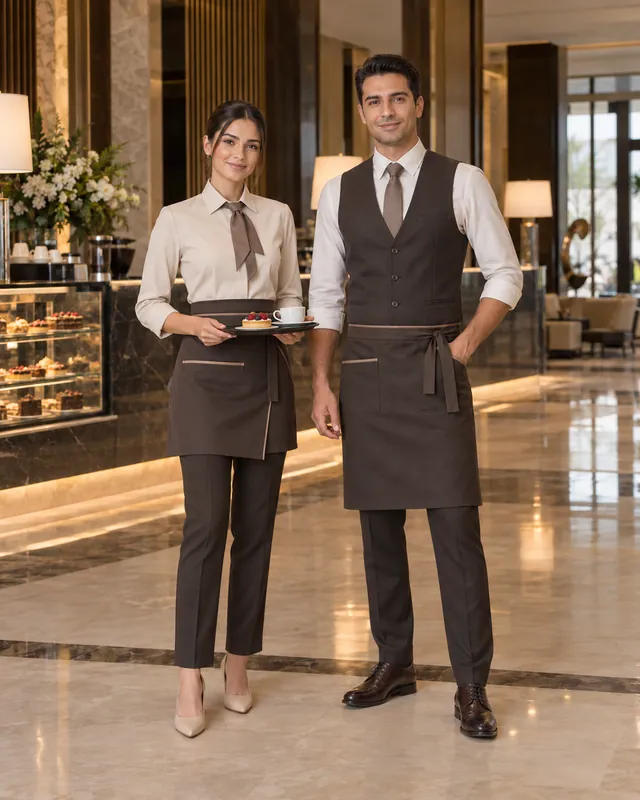
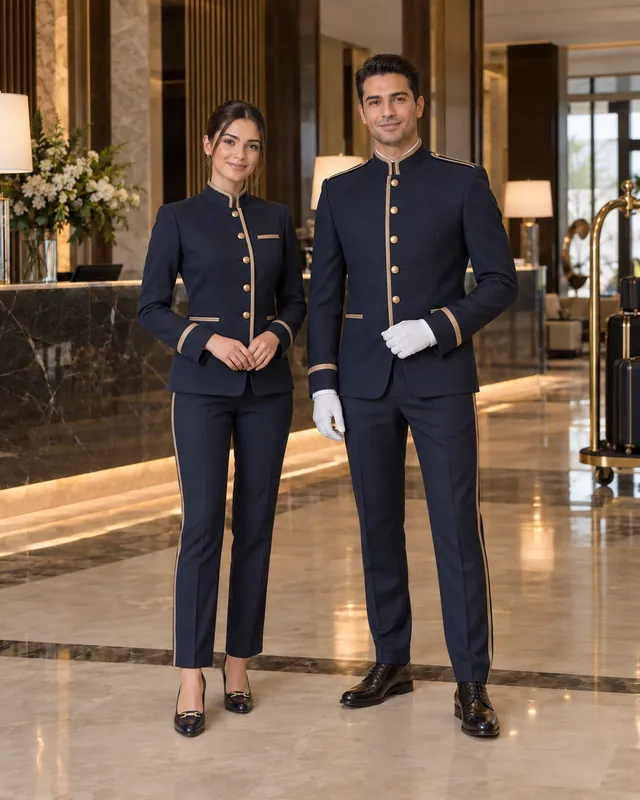
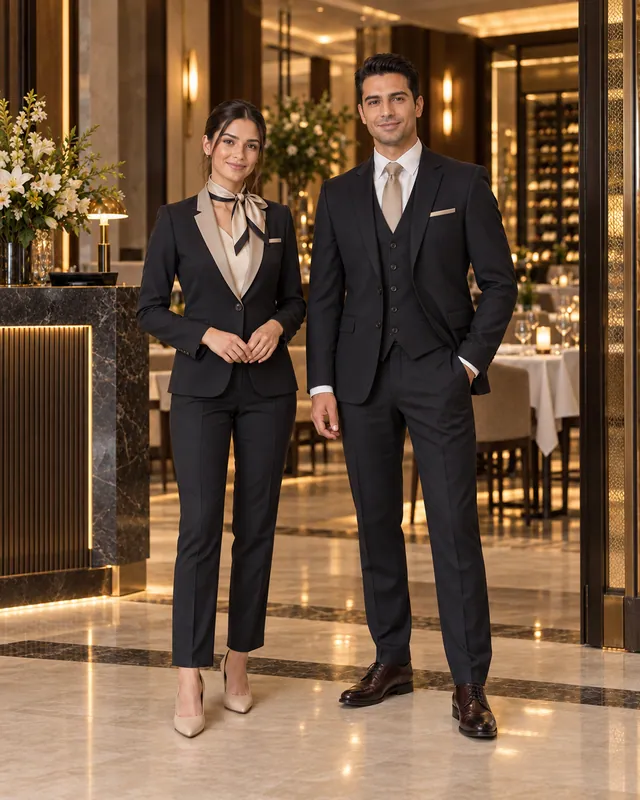
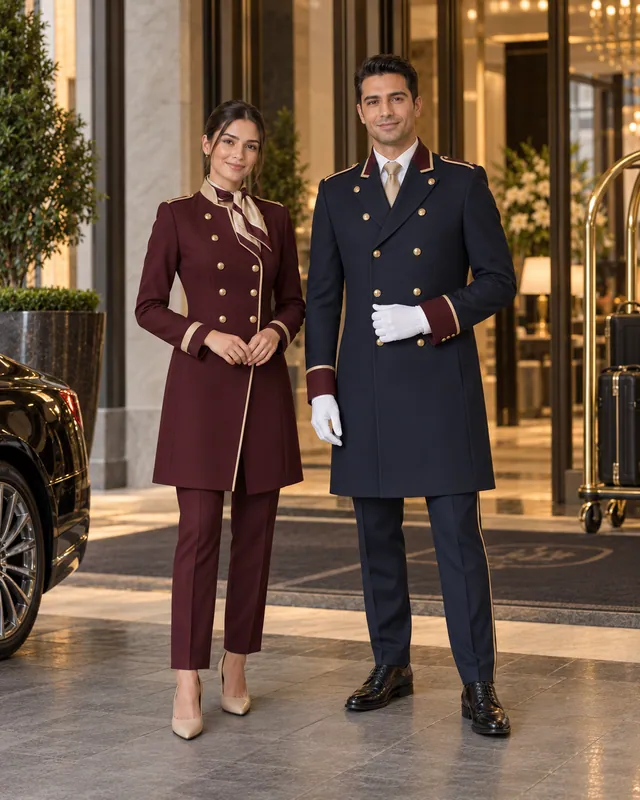
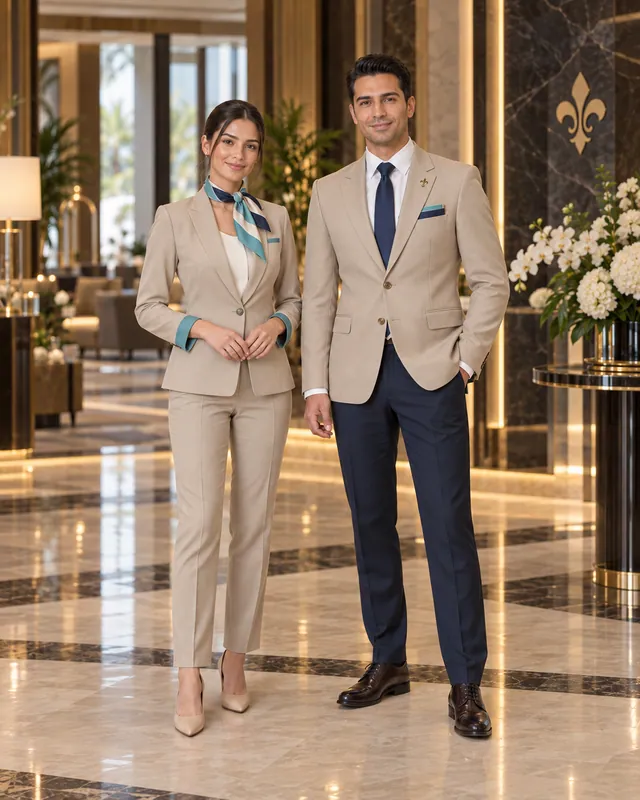
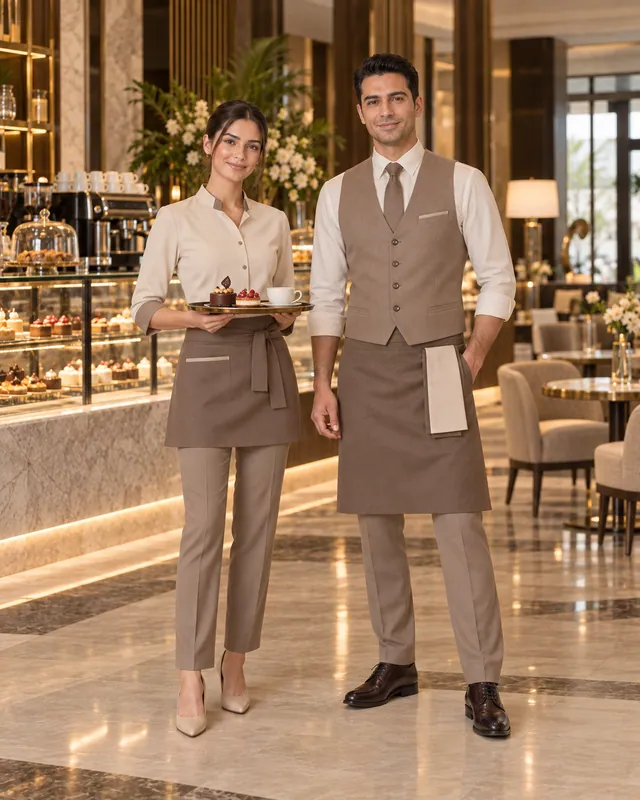
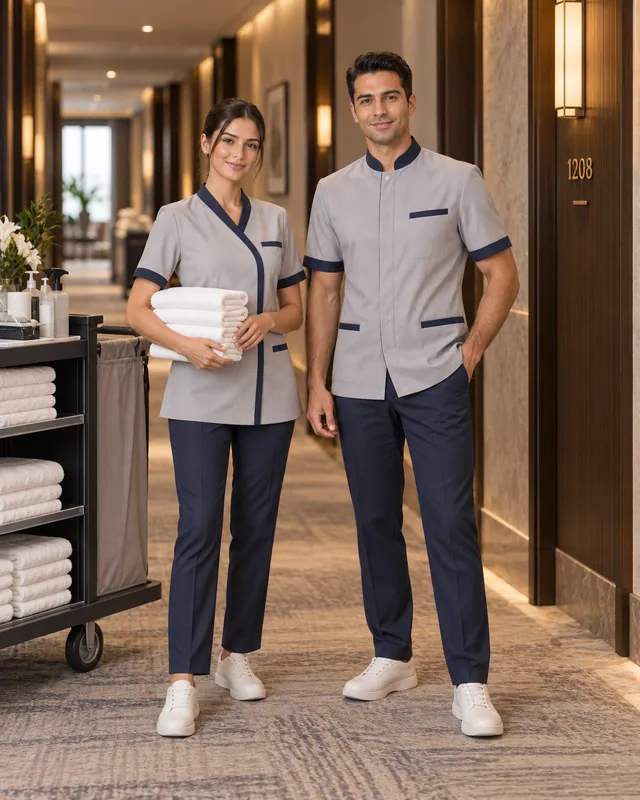
The first step is to see every team that will wear a uniform in a single overview. Front office, guest relations, bell and concierge, food and beverage service, housekeeping, spa, kitchen and management teams all differ in how much guest contact they have and how physically demanding their work is. Front office uniforms, for example, call for a tailored, sharp look, while freedom of movement comes first for the housekeeping team. Defining positions, headcount and the female–male split for each department from the outset makes every subsequent step easier.
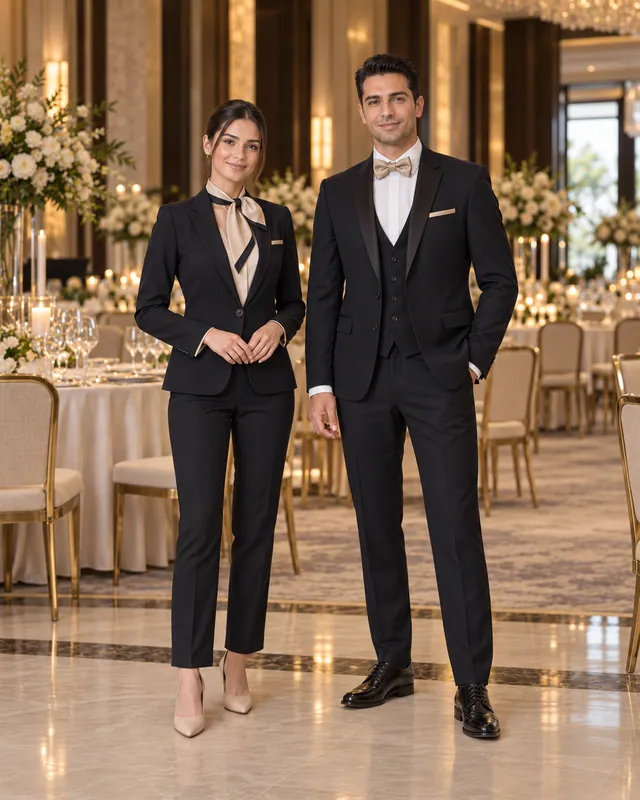
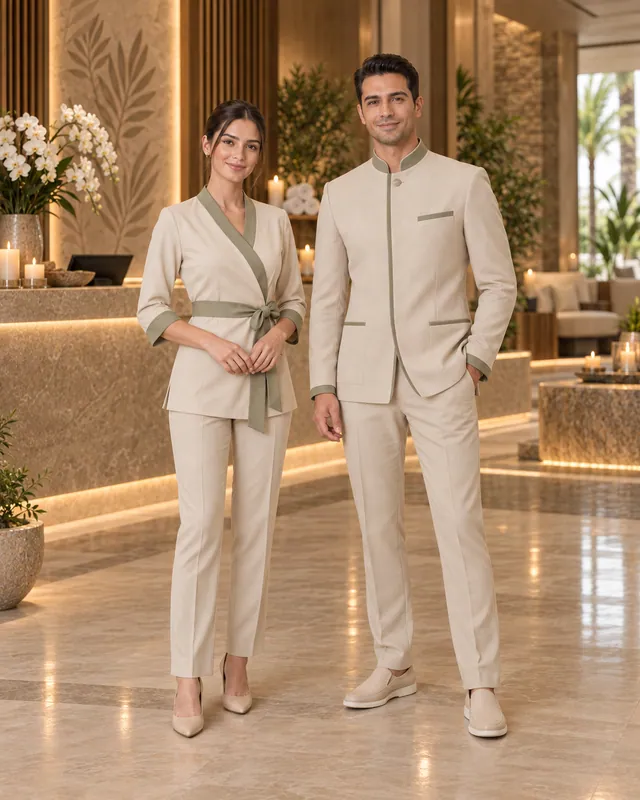
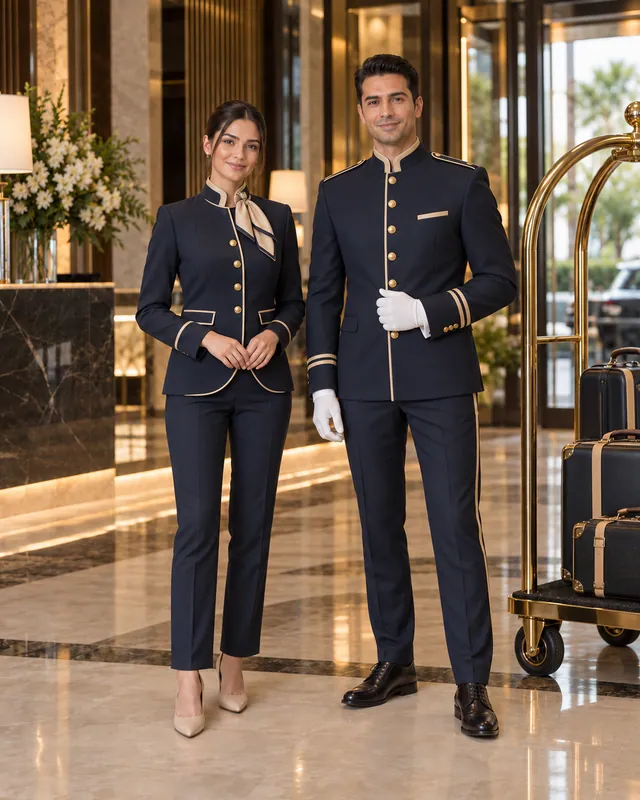
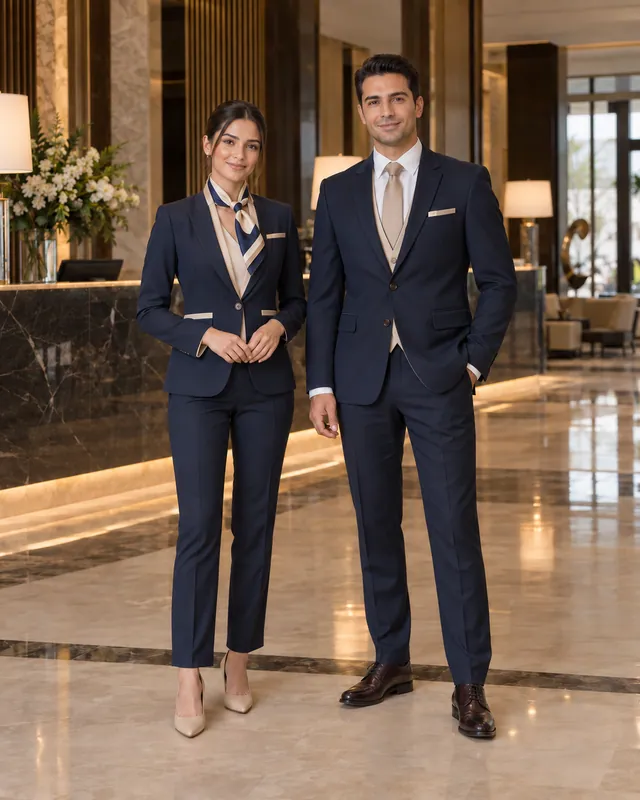
The second step is to bring these departments together under one visual language. A color hierarchy is a powerful tool here: dark, formal tones for management and front office, warm neutrals for service teams, and practical, stain-concealing colors for housekeeping. Your corporate color, repeated across all teams through details such as piping, scarves, ties or buttons, then ties everything together. Guests can intuitively tell who does what, and the hotel looks like one cohesive brand. Reviewing our department-by-department hotel and resort solutions with this in mind can be a good starting point.
3–4. Fabric, working conditions and comfort for long shifts
Choosing fabric starts with a simple question: where and how will the uniform be worn? A receptionist working in an air-conditioned lobby does not have the same needs as a pool bar attendant working outdoors all day. As a general approach, breathable, lightweight fabrics are preferred in hot and humid conditions, while blends with strong color and shape retention that are easy to iron work best for frequently washed pieces. For jackets and suits, wrinkle-resistant fabrics that hold their structure carry a professional look through to the end of the day.
Comfort is often overlooked, yet it directly affects staff satisfaction. Over long shifts, cuts that do not restrict arm and shoulder movement, trousers that do not pinch at the waist, linings that do not cause sweating and soft finishes on surfaces that touch the skin all make a difference. Seeing the fabrics on a swatch card and feeling the texture in your hand before you decide gives you a far more reliable picture than descriptions on paper. A team that feels comfortable passes that ease on to your guests.
5–6. Fit, size planning and logo and name embroidery
The same design sits differently on different body types. That is why, when choosing a pattern, you need to look at your team’s real profile rather than a single sample size. In tailored pieces such as jackets and trousers in particular, even small differences in shoulder width, sleeve length and waist measurement affect the overall look. Planning women’s and men’s cuts separately, and where needed offering two different silhouettes within the same department, such as a tunic and a jacket, creates a uniform program in which everyone feels good.
The soundest approach to size planning is to start from your staff list. Rather than entering each employee’s size one by one, building a size–quantity matrix for each style reduces errors and simplifies the purchasing process. Our size planning tool helps you derive this breakdown from your staff list. Don’t forget to leave a small margin for spare pieces and for employees who will join during the season.
Logo and name embroidery is the finishing touch that ties the uniform to your corporate identity. The placement of the logo on the chest, collar or apron, its size and its thread color should be considered together with the color and texture of the fabric. Name embroidery creates a sense of warmth in teams that interact one-on-one with guests, but may be unnecessary in departments that use name badges. Making this decision department by department is the best approach.
7–8. Samples, fittings and a reorder plan
The sampling stage should never be skipped before moving to bulk production. A sample lets you see in concrete terms how the color looks in real light, how the fabric drapes on the body and how the embroidery is scaled. Fittings with a few employees from different size groups bring small pattern issues to light before production. Gathering feedback from department heads at this stage also helps you anticipate practical problems that may arise in day-to-day use.
Hotel operations are never static: staff change, new positions open and worn pieces need replacing. That is why it is important to design your uniform program to be ready for reorders from day one. Keeping a record of the approved styles, colors, fabrics and embroidery details lets you seamlessly reproduce the same look for an employee who joins the team mid-season. Our corporate portal, currently in preview, also aims to bring all your approved products together in one place, reducing a reorder to a simple choice of sizes and quantities.
9. Seasonal needs in Antalya and other resort destinations
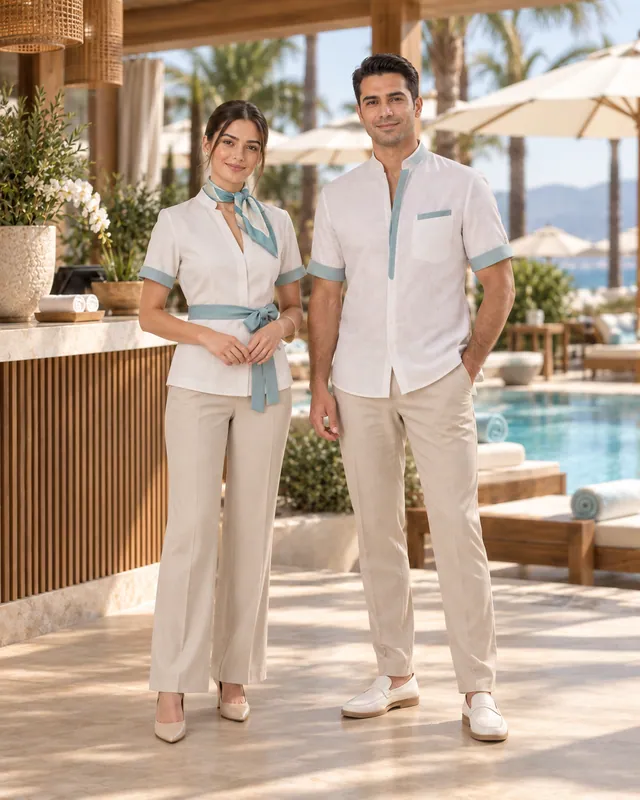
In resort-focused destinations such as Antalya, uniform planning differs markedly from that of city hotels. High summer heat and humidity, teams working outdoors all day and staff numbers that grow rapidly at the start of the season sit at the heart of the plan. For staff working at the pool, on the beach and in open-air restaurants, lightweight fabrics, light tones and relaxed cuts come to the fore, while a more formal look can be maintained in the lobby and for evening service.
Pre-season planning is the most effective way to avoid shortages during peak periods. Reviewing your uniform program in the winter months, completing sampling and fittings during the quiet season, and preparing a spare-size plan for staff who will join mid-season ensure that your entire team looks complete on opening day. You can explore the Riviera collection for outdoor teams, and visit our Antalya uniform solutions page for region-specific needs.
10. What drives your hotel uniform budget
In corporate uniform projects, price cannot be reduced to a single tag; it is the result of several variables combined. There is naturally a budget difference between styles chosen from a catalog and a collection developed specifically for your brand. To plan your budget realistically, it helps to clarify the following factors from the start.
- Quantity and style variety: The total number of pieces and how many different styles the program will include
- Garment type: The difference in workmanship and materials between a tailored jacket and an apron
- Fabric choice: Texture, durability and performance properties suited to the working conditions
- Personalization: Logo and name embroidery, contrast piping, custom buttons and accessories
- Design scope: Adapting existing styles or developing a bespoke collection from scratch
Bring your entire uniform program into one project
Once you have clarified these ten points, you have more than a product list: you have a roadmap that defines your team’s look from start to finish. The most efficient route is to bring all departments, styles and size breakdowns together in a single request. To do so, you can build your quote list, or if you are considering a collection created exclusively for your brand, explore our custom design process. Rapsodi Collezione, the Antalya-based uniform manufacturer backed by Günay Triko’s textile experience since 1984, plans this process together with you so you can make the right choice among hotel uniform designs.
Frequently asked questions
Where should I start with a hotel uniform project?
The best starting point is to list the departments, positions and headcounts that will wear uniforms. You can then define style and color preferences for each department and derive the size breakdown from your staff list. Once this information is ready, the corporate quotation process moves forward much more clearly.
Should all departments wear the same color?
No. A shared color language is usually maintained, while differences in tone and detail distinguish one department from another. Repeating your corporate color through details such as piping, scarves, ties or buttons preserves cohesion while making different roles easy to tell apart.
Are samples and fittings really necessary?
They are strongly recommended, especially for bulk orders. A sample lets you see the color, fabric and embroidery in real conditions, while a fitting shows you how the pattern sits on different body types. It is a far more efficient route than making corrections after production.
How do we get uniforms for hotel staff who join mid-season?
When the approved style, color and embroidery details are on record, the same items can be reordered for new employees simply by specifying sizes and quantities. That is also why it pays to plan a small margin of spare sizes in your first order.
How are corporate uniform prices determined?
Pricing depends on quantity, garment type, fabric choice, personalization such as logo and name embroidery, and the scope of the design. For this reason, the exact price in corporate projects is set by a quotation prepared from a quote list that reflects your requirements.