Guide · 7 min read
Waiter Uniforms and Aprons: A Guide for Restaurants, Cafés and Bars
Waiter uniforms are among the most visible brand elements, accompanying every minute a guest spends at the table. In this guide, we cover what to keep in mind when dressing your service team, from apron types to vests and shirts, and from color choices to stain management.
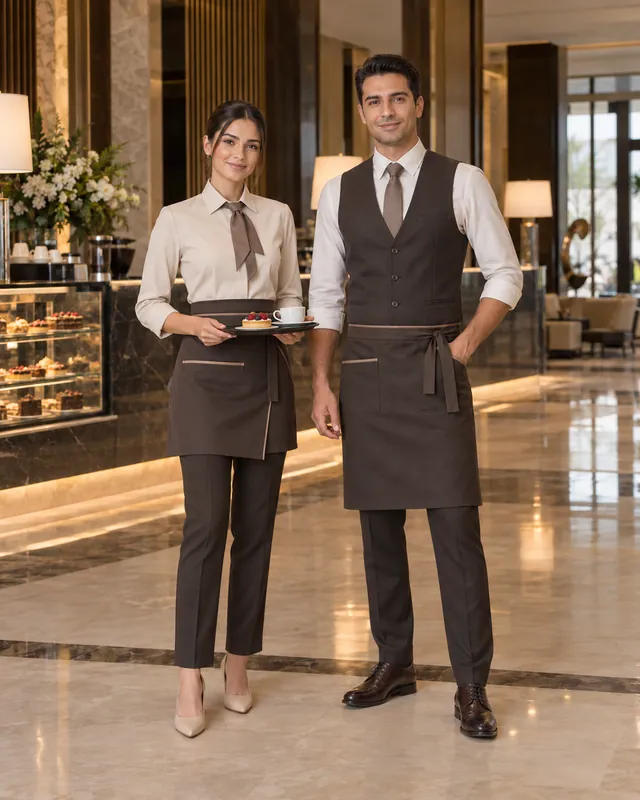
How waiter uniforms carry the atmosphere of your venue
In a restaurant, the people guests make eye contact with most often are the service team. That is why waiter uniforms should be seen as an element that completes the atmosphere of the venue, alongside your menu, interior design and music. A white-tablecloth fine dining room, a seaside bistro and a third-wave coffee shop downtown each expect a very different look from their service staff. Uniforms that tell your venue’s story also show up in guests’ photos and memories.
The right service staff uniform answers two questions at once: what should the guest see, and what does the team need to be able to do? A team that carries trays, bends down and straightens up constantly and moves back and forth between the kitchen and the dining room needs clothing that is both comfortable and able to stay neat all day. In restaurants and bars, this balance is usually built on three core pieces: the apron, the service shirt and the vest.
Waist apron or bib apron?
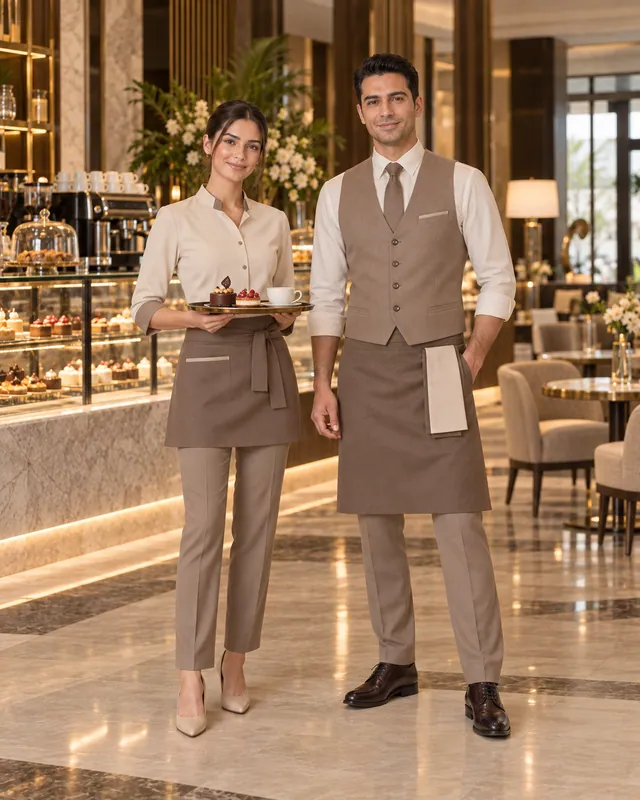
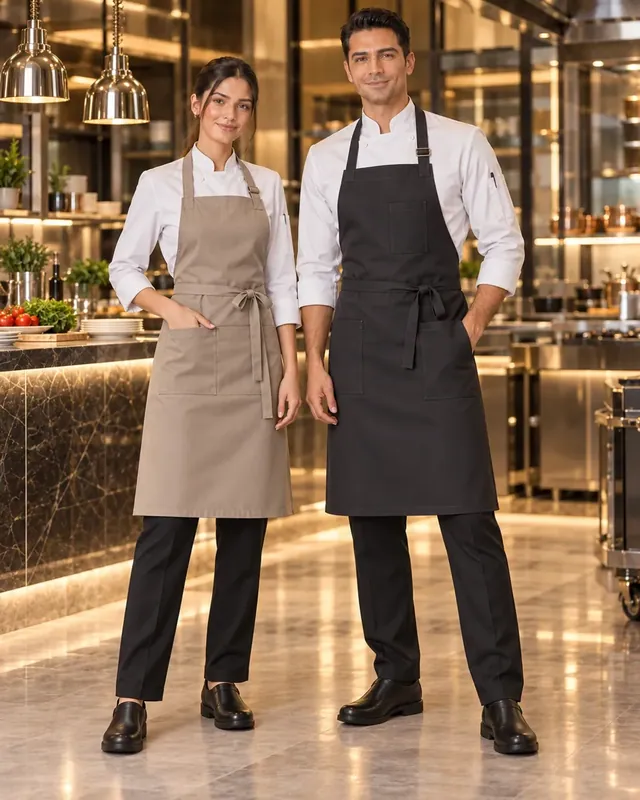
The apron is the most functional and the most easily branded piece in a service team’s wardrobe. The choice between the two main options depends on your style of service and the work your team does. A waist apron leaves the shirt and vest visible, giving a more elegant and lighter silhouette; it is a frequent choice for evening service, à la carte restaurants and lobby bars. A bib apron, on the other hand, protects a larger area of the body and is more practical in high-splash areas such as cafés, breakfast rooms and bar counters.
When choosing a server apron, you should also consider its length, pocket placement and fastening. Above-the-knee and knee-length styles create different looks, while well-placed pockets for pens, order pads and card readers directly affect service speed. Long ties that fasten at the back keep the waist looking neat, and adjustable neck straps make it easier for the same apron to fit employees of different heights. Using both apron types in the same venue is also an option: for example, bib aprons at breakfast and waist aprons for evening service.
- Waist apron: Elegant silhouette that lets the shirt and vest stand out; evening service and à la carte concepts
- Bib apron: Wide coverage for a busy pace; cafés, breakfast rooms and bar counters
- Shared criteria: Length, pocket placement, fastening, logo area and durability under frequent washing
A layered look with service shirts and vests
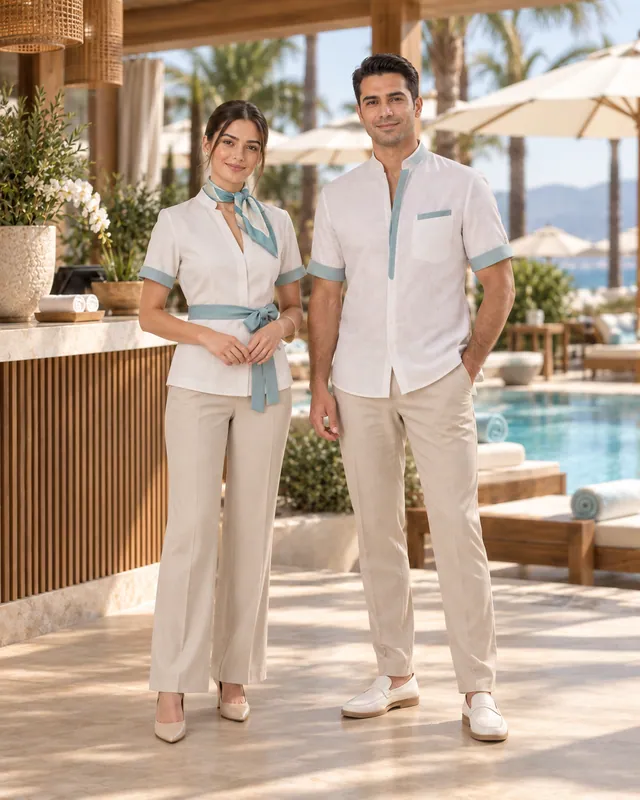
The shirt beneath the apron forms the foundation of the service team’s overall look. A good service shirt should not restrict arm movement, should not easily come untucked when bending and reaching, and should still look neat at the end of a busy evening. For female team members, a women’s service shirt with a tailored fit makes a difference in both comfort and a polished appearance. Sleeve length is also a matter of choice: long sleeves create a more formal impression, while short sleeves are cooler for summer months and outdoor areas.
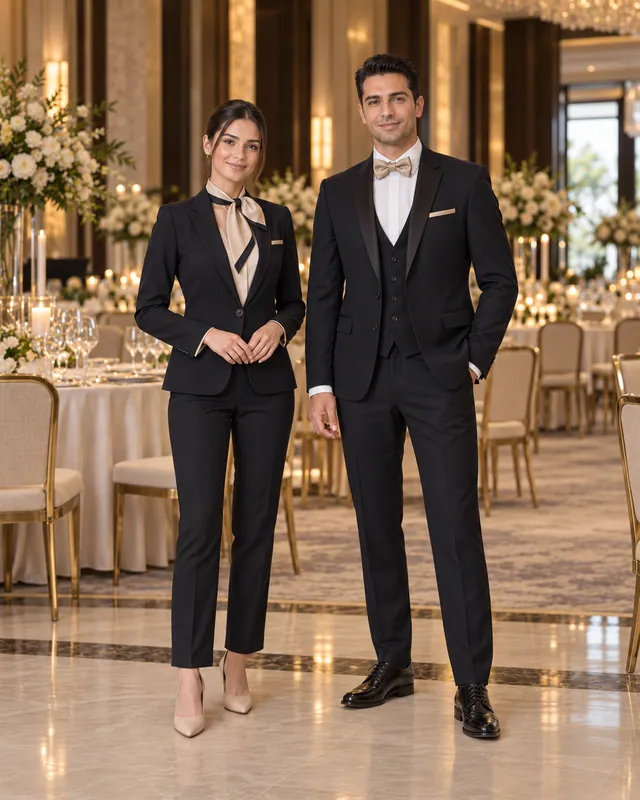
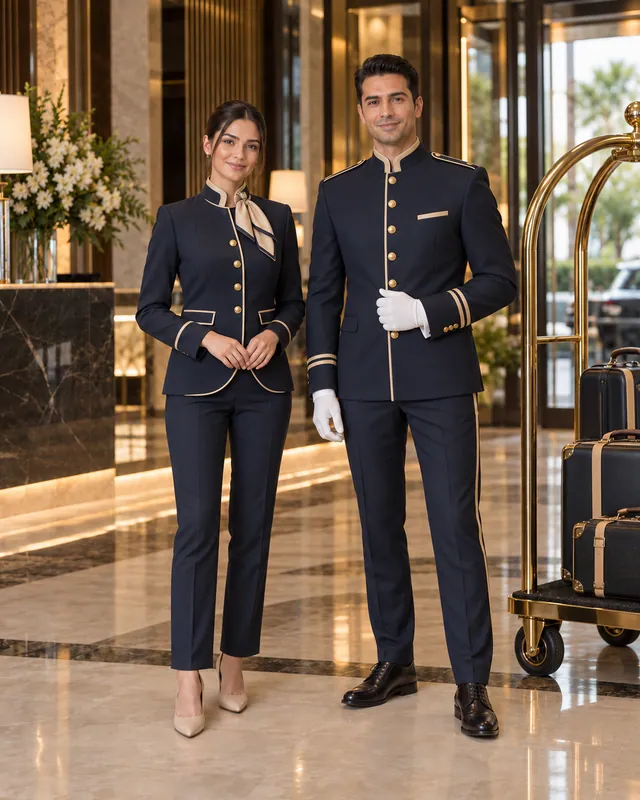
A vest adds an extra level of formality to the look. Especially for evening service, in bars and in hotel F&B service teams, a service vest combines with the shirt and apron to create a finished silhouette. A vest is also an elegant way to signal differences in responsibility within the team in positions where no apron is worn, such as the head waiter or the host.
Color choice and venue atmosphere
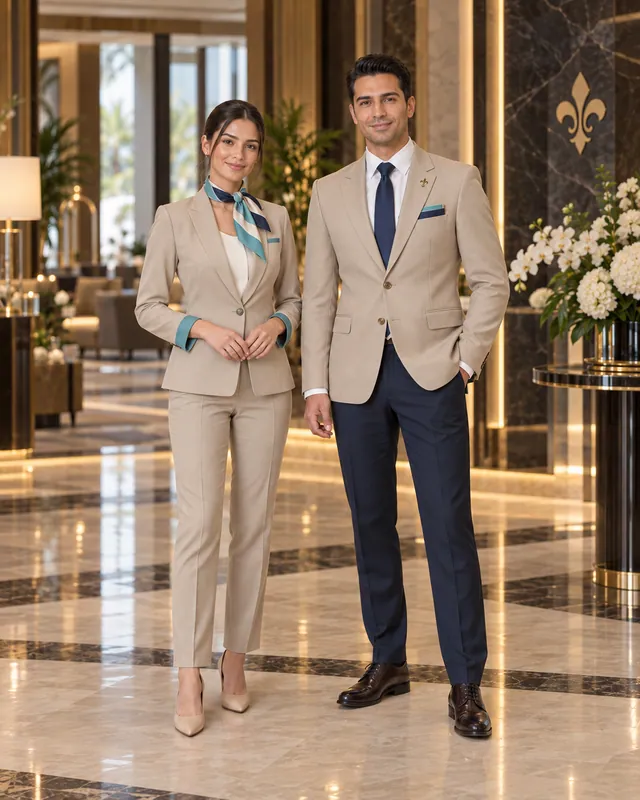
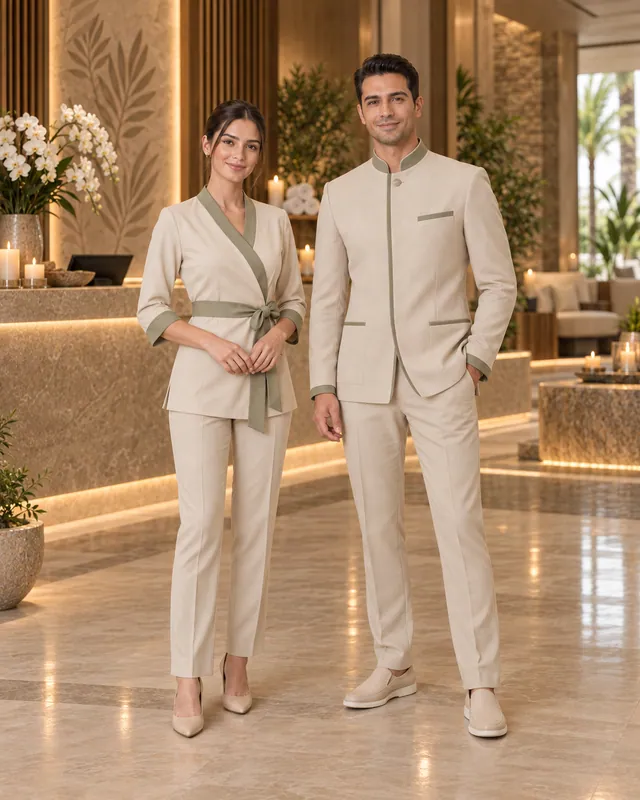
Color determines how well your service team harmonizes with the venue. Espresso, taupe and earth tones support a warm, welcoming atmosphere, while black and anthracite create a more modern, bolder impression. Navy offers a classic, reassuring look, and light beige and ecru capture a natural feel in bright, airy venues used during the day.
When choosing colors, you also need to factor in the tones of the floor, furniture and lighting. If the team wears exactly the same color as the décor, they can disappear into the space; if they wear a completely contrasting color, they can look disconnected from it. The best results usually come from combining a main color one shade darker or lighter than the venue’s palette with a small detail that carries your corporate color. That detail can be as small as piping, a button or the color of the apron ties. In venues where day and evening service are run by different teams, using the same cut in two different colors is also an elegant way to support the shift in atmosphere.
Stains, washing and durability
Service uniforms are the garments that face the heaviest wear in any operation. Coffee, wine, sauce and grease stains are part of daily life, so color and fabric should be judged on ease of care as much as on aesthetics. Medium and dark tones tolerate stains better. If you prefer a light color, a practical solution is to use that tone on more protected pieces rather than on the apron, which is directly exposed to stains, or to increase the number of spares.
On the fabric side, the general rule is to choose materials that withstand frequent washing, dry quickly and are easy to iron. Communicating washing instructions clearly to the team and, where applicable, to the laundry also extends the life of each piece. The number of sets per person should be based on your shift pattern and washing cycle; in peak season, one spare set ensures the team always looks clean and complete.
- Choose medium and dark tones for the pieces most exposed to stains
- Plan aprons as items that are replaced more often than shirts and vests
- Share washing and ironing instructions with your team
- Set the number of spare sets per person according to your shift pattern
Logo and name embroidery on aprons
The apron is the most natural showcase for your logo within the service team. On a bib apron, the logo is usually placed at chest level; on a waist apron, it goes on one of the lower corners or on a pocket. The thread color should harmonize with the apron’s tone while remaining legible: tone-on-tone embroidery creates a sophisticated effect, while a contrasting color delivers stronger brand emphasis. Making sure the embroidery area does not clash with pockets, seams and ties also preserves both the look and ease of use.
Name embroidery, meanwhile, personalizes the relationship with guests. Being able to address a server by name creates a warm experience, especially in long-stay hotels and restaurants with a loyal clientele. During periods of frequent staff turnover, removable name badges may be a more flexible solution than name embroidery.
Special notes for baristas and bar teams
Café staff uniforms can use a more relaxed, casual language than restaurant service, but expectations for functionality are higher. A barista apron should protect the body from espresso machine steam, milk foam and coffee grounds, and have practical pockets for a thermometer, pen or cleaning cloth. That is why cafés mostly opt for bib aprons, adjustable neck straps and durable fabrics.
For bar teams, the evening atmosphere is the deciding factor. A trio of a dark shirt, vest and waist apron creates a classic cocktail bar look, while lighter fabrics and lighter tones may come to the fore at pool and beach bars. For teams working outdoors, colors that resist fading in the sun and breathable fabrics should also be taken into account. Once you have defined the styles, colors and size breakdown for all of these restaurant uniforms, you can explore the Servizio collection and build your quote list with your team’s requirements.
Frequently asked questions
Where should I start when choosing waiter uniforms?
First, clarify your venue’s concept and style of service. Then decide which pieces the team will wear, meaning the apron type and the shirt–vest combination. When color and fabric choices are built on this framework, you get a far more consistent result.
Can a logo be embroidered on a server apron?
Yes. Aprons are among the best-suited pieces for logo embroidery. The placement, size and thread color of the logo are determined by the apron’s type and tone, and name embroidery can also be added on request.
Which is more practical: a waist apron or a bib apron?
It depends on your style of service. A waist apron offers a more elegant silhouette and suits evening service. A bib apron provides wider coverage, which makes it the stronger choice in busy, high-splash areas such as cafés, breakfast rooms and bar counters.
How many sets per person should we plan for the service team?
Rather than a fixed number, we recommend basing this on your shift pattern and washing cycle. The general approach is that while each employee wears one set, at least one other set is in the wash or in reserve; this margin can be a little wider for aprons.