





Guide · 7 min read
Corporate Uniform Cost: What Shapes Your Quote and How to Prepare the Right Request
Corporate uniform cost is rarely a single unit price; it is the sum of your decisions on quantity, styles, fabric and customization. In this guide we walk you step by step through what shapes your quote and how to prepare an accurate request for quote for your uniform manufacturer in Turkey.

Why corporate uniform cost can’t be summed up in one number
When you start researching uniforms for a hotel, restaurant or corporate office, price is usually one of the first questions. But corporate uniform prices aren’t fixed like the tag on a retail shelf. The same jacket carries a different cost structure depending on the fabric chosen, the size breakdown, the logo to be embroidered on it and the schedule the order is produced on. That’s why, in corporate projects, the price becomes clear through a quote prepared after your needs have been heard.
At first glance this approach may seem slow to procurement teams, but in practice it prevents surprises. When you know which line items make up the quote, you can see more clearly where your budget can flex and where you shouldn’t compromise on quality. The sections below summarize the factors that determine all staff uniform prices, starting with the classic question: how much do hotel uniforms cost?
Quantity and size breakdown: the foundation of your quote
Total quantity is the best-known factor affecting price. Preparation work in production, such as pattern preparation, cutting plans and embroidery programming, is carried out regardless of order size; as quantities grow, the share of that preparation per piece goes down. This is the main reason wholesale uniform orders are generally more favorable in terms of unit cost.
Total quantity alone isn’t enough, though; the size breakdown matters just as much. The same number of jackets concentrated in two sizes affects cutting and production planning very differently from the same number spread across many sizes. Sharing a size-by-quantity matrix for each style in your request therefore allows both the price and the production plan to be calculated more realistically. To collect sizes from your staff list, you can use our size planning tool.
When working out the size breakdown, it helps to consider not just your current team but also staff joining during the season and the spare pieces you’ll need to replace worn items. How many sets are planned per employee, for example whether more than one shirt or apron is issued for daily changes, directly determines the total quantity. Doing this calculation up front helps you consolidate your needs into one planned production run instead of placing small, scattered top-up orders mid-season.
Garment type, fabric and customization
Every garment involves different workmanship. A lined blazer needs a multi-piece pattern, interlinings and a longer sewing process, while a waist apron goes through a far simpler production. That’s why reception jackets and F&B service aprons in the same project naturally represent different cost items.
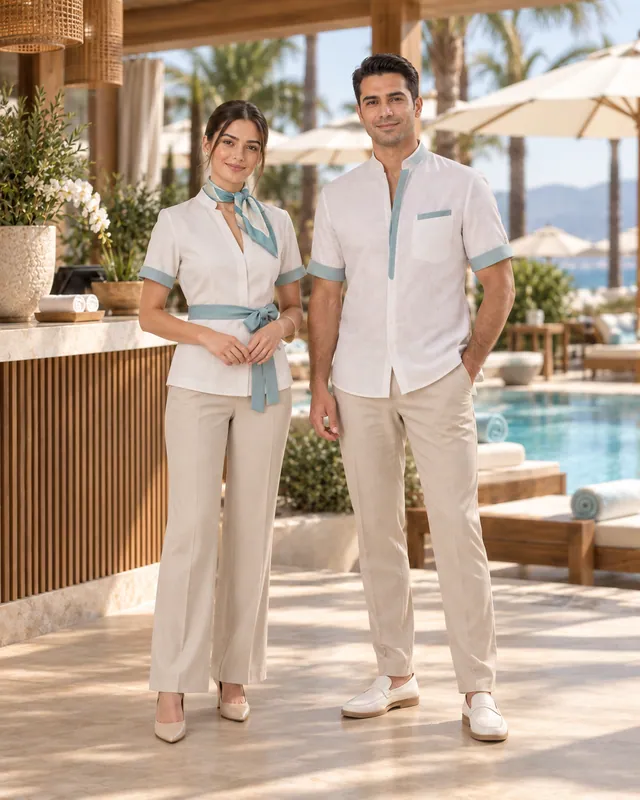
Fabric choice is decisive too. A fabric’s weave, weight, stretch and resistance to washing and heavy use directly affect both appearance and cost. In hot climates like Antalya, breathable, lightweight fabrics stand out for teams working outdoors, while more structured fabrics may be preferred in air-conditioned lobbies or for evening service. Choosing fabrics from a swatch card helps you strike this balance by seeing and touching the options.
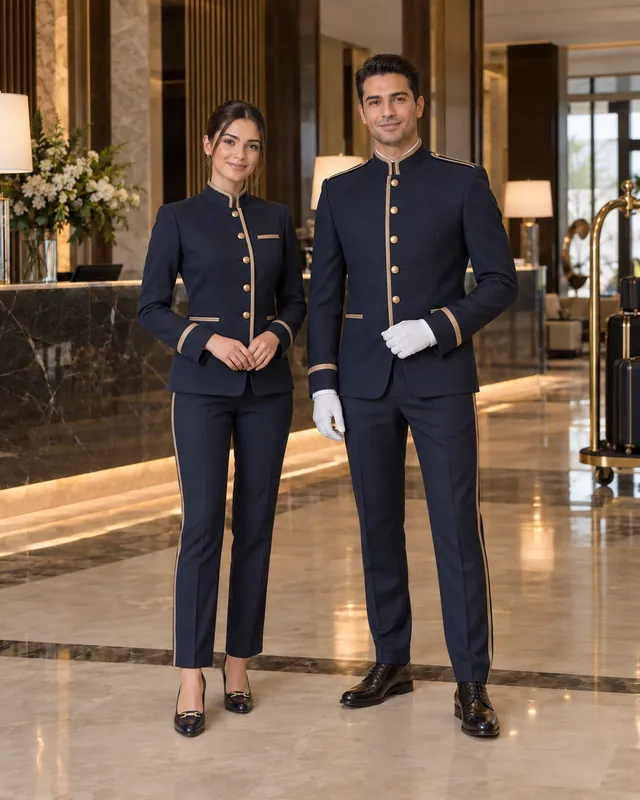
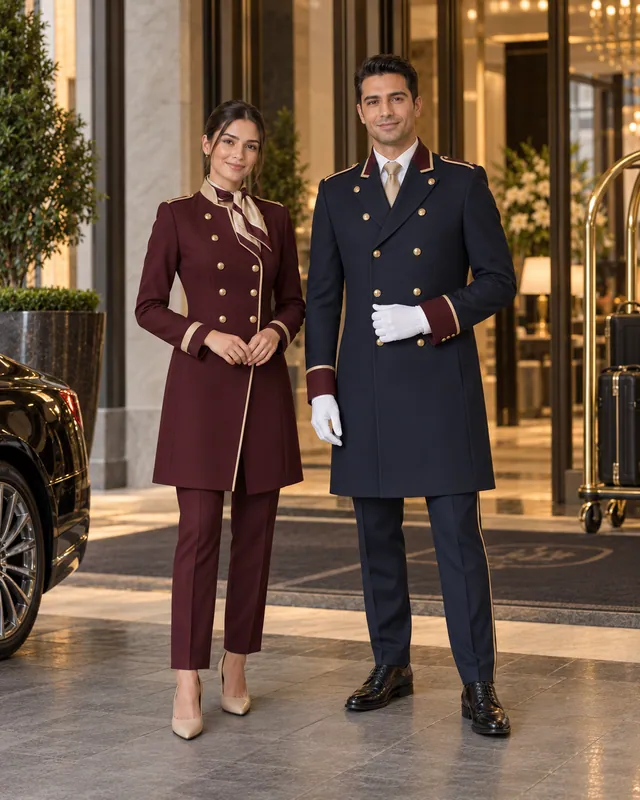
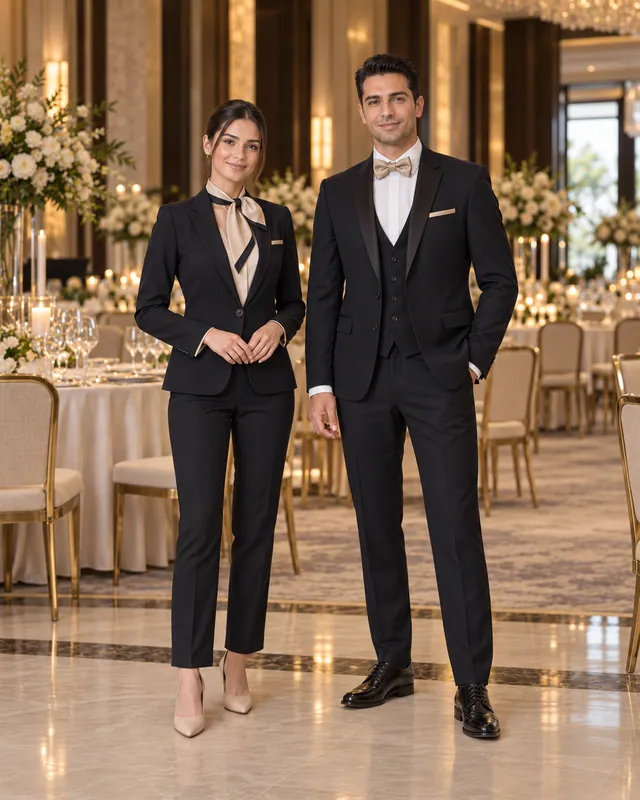
Customization is the most flexible part of the quote. Matching the fabric color to your corporate color, adding contrast piping to the collar or pocket opening, and selecting custom buttons and trims create a look unique to your brand; however, each detail is reflected in production as a separate operation. Asking yourself these questions makes the decisions easier:
- Does this detail genuinely strengthen how guests perceive the brand?
- Will the detail be used across all departments, or only on guest-facing teams?
- Will it be easy to keep the same button, piping and color on repeat orders?
The scope of logo and name embroidery
Logo embroidery is the most common way to carry your corporate identity onto a uniform, and its impact on cost depends largely on its scope. Embroidery size, number of colors, the level of detail in the logo and how many placements it will be stitched in are all assessed together. A small single-color logo on the chest and a large multicolor emblem on the back may fall under the same line item, but they mean very different workloads.
Name embroidery, on the other hand, means every piece becomes personal. That’s why the name list needs to be complete, correctly spelled and matched to size information. Sharing your logo’s vector file and corporate color codes right from the start speeds up embroidery preparation and helps your quote come together faster. Deciding by department which items get a logo and which get name embroidery is also a practical way to avoid unnecessary costs.
Catalog style or custom design?
Design complexity is the most strategic decision affecting price. Choosing an existing catalog style and specifying color, logo and sizes offers a more predictable process, because the pattern and production method are already in place. A collection designed from scratch involves additional stages such as the brief, concept, fabric and color selection, sampling and fittings, and each of these stages takes effort and time.
Samples and fittings are steps that should not be skipped, especially with custom uniforms. A sample shows how the design looks in the real fabric; a fitting reveals how the pattern sits on different body types. These stages may appear as a separate line item in your quote, but compared with the cost of a mistake discovered after bulk production, they are usually a smart investment. If you’re considering a collection made exclusively for your brand, take a look at our custom design process.
For many businesses, the most balanced route is to start from a catalog style and personalize it with selected details such as corporate color, piping or buttons. That way you get a brand-specific look while the process stays predictable. When deciding which route suits you, weigh your brand’s positioning, the number of departments and the role the uniform plays in the guest experience together.
Timing, season and repeat orders
The calendar is a cost factor that is often overlooked. On projects with a fixed date, such as a new hotel opening or the start of the season, a late start narrows your options: fewer fabric alternatives are available and the time set aside for sampling and fittings gets shorter. In Antalya, the pre-season period is when many businesses in the industry are preparing uniforms at the same time. Starting your project early means more options and a calmer approval process.
Repeat orders are an important part of the long-term budget. Staff turnover, new hires and the replacement of worn pieces keep a uniform program active all year round. If approved styles, fabrics and embroidery files are on record, top-up orders can often proceed with just size and quantity information. So when you evaluate the first quote, think not only about today’s order but about next season as well.
Checklist for an accurate request for quote
The clearer the brief behind a quote, the more accurately corporate uniform prices can be calculated and the fewer revisions the process needs. Requests sent with missing information usually lead to follow-up questions and new revisions; a complete brief gives you a comparable, realistic picture from the very first quote. Before sending your request, we recommend gathering the following information.
Once this information is ready, you can select products and build your quote list, bringing all your departments, from reception to the kitchen, together in a single corporate request. To see each stage of the purchasing process step by step, you can also read our corporate purchasing guide.
- List of departments and positions (reception, housekeeping, F&B service, kitchen, etc.)
- Required items and style preferences for each position
- Size-by-quantity matrix for each style
- Corporate colors, brand guidelines and the logo’s vector file
- Items to receive logo and name embroidery, plus embroidery placements
- Fabric expectations: climate, intensity of use and laundry conditions
- Need for samples and fittings
- Target delivery date or opening and season schedule
- Expected repeat orders and, if available, photos of your current uniforms
Frequently asked questions
Why is there no fixed price list for corporate uniforms?
In corporate projects, price depends on variables such as quantity, size breakdown, garment type, fabric, customization and logo application. That’s why a corporate quote is prepared specifically for you after your needs have been assessed.
Do I need exact quantities to get a quote?
Exact quantities make the quote more accurate, but you can start with estimated quantities at the first stage. As the size breakdown becomes clearer, the quote can be updated accordingly.
Can I combine different departments in one quote?
Yes. You can add items for different departments, such as reception, housekeeping, service and kitchen, to the same list and create a single corporate request. Build your quote list here.
Why are samples and fittings important?
A sample shows how the chosen style and fabric really look; a fitting shows how the pattern sits on the different body types in your team. These steps let you catch potential issues before bulk production.
How do repeat orders work?
When approved styles, colors and embroidery details are on record, repeat orders usually only require you to send size and quantity information. This makes outfitting new staff and seasonal refreshes much easier.