Guide · 7 min read
Front Desk Uniforms: Designing the First Impression at Reception
Front desk uniforms represent your brand from the moment a guest steps into the hotel. In this guide we look at how to balance fit, color, accessories and comfort in reception uniforms, with insights from our work as a hotel uniform manufacturer in Antalya.
Front desk uniforms and the first impression
In a hotel, the front office is usually the first team guests deal with face to face. The few minutes spent at check-in set expectations for the rest of the stay. That’s why front desk uniforms are not just a clothing choice but a visual expression of the hotel’s approach to welcoming guests. However carefully the lobby’s architecture, lighting and materials have been designed, the appearance of the team behind the desk should reflect the same care.
Well-designed reception uniforms send guests three messages: there is order here, this team is ready to help you, and this brand cares about details. What carries that message is usually not flashy details but the right fit, harmonious colors and a clean, cohesive look. You can explore front office looks suited to different hotel concepts on our Front Office & Reception page.
Fit and tailoring: why the cut matters at the front desk
Front office staff are in guests’ line of sight all day, and mostly visible from the waist up. That’s why shoulder fit, collar line and sleeve length are the points that deserve the most attention in hotel reception uniforms. A jacket that is too loose at the shoulders or too short in the sleeves can leave a careless impression, even if it’s made from a high-quality fabric.
Patterns should therefore be chosen to cover different body types, and the fitting stage should not be skipped. A fitting shows how the jacket sits buttoned and unbuttoned, whether trouser and skirt lengths are right, and whether staff can move comfortably while seated at the desk or working on their feet. When planning team sizes, our size planning tool helps you turn your staff list into a size-by-quantity matrix.
Another dimension of fit planning for front office teams is consistency. When the same jacket keeps the same line across different sizes, team members standing side by side look like one unit. Keeping trouser and skirt lengths in similar proportions across the team also creates an orderly, cohesive picture in the lobby.
Uniform options for female and male receptionists
A front office wardrobe usually consists of pieces that complement one another. This modular structure lets you build combinations suited to different preferences and body types within the same team while keeping the look unified.
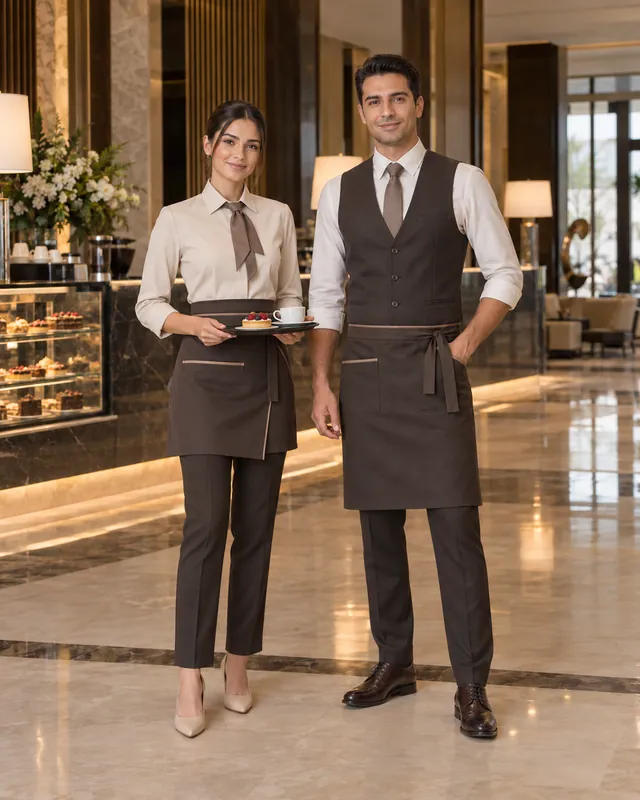
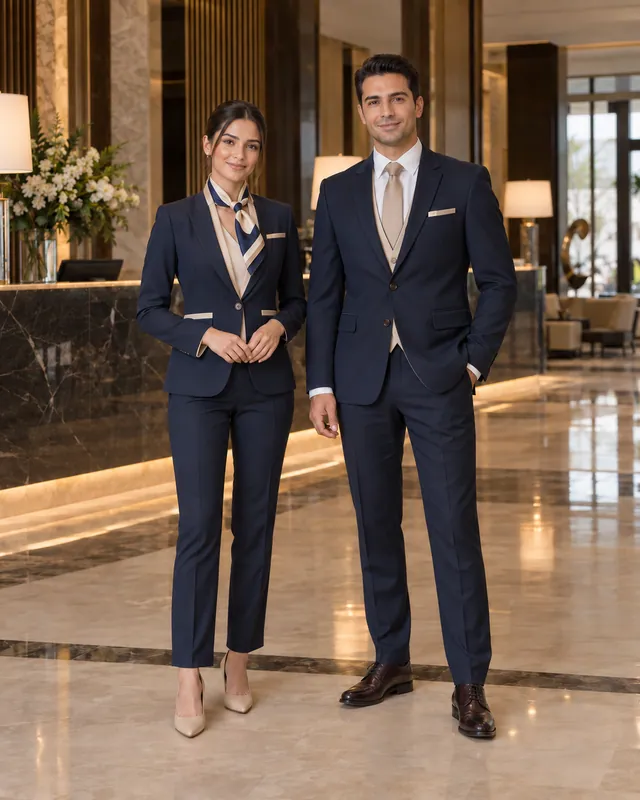
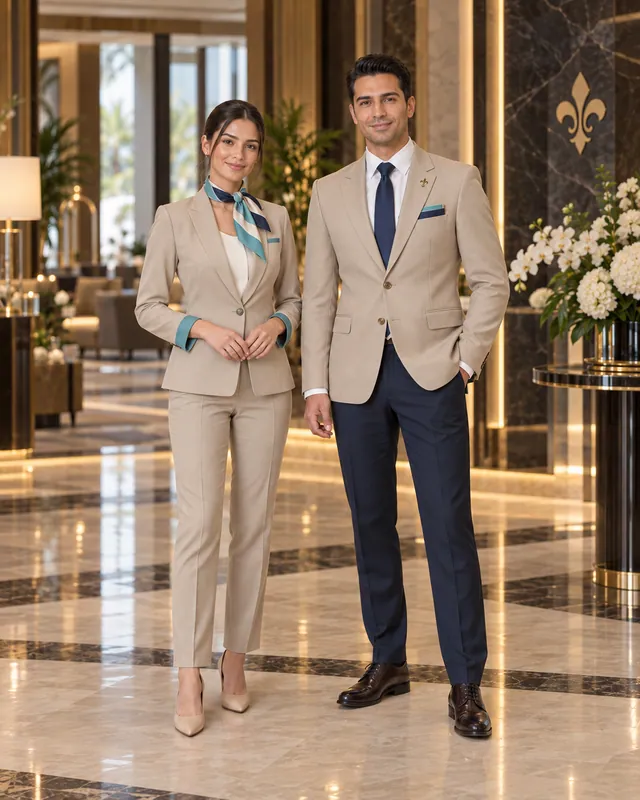
Giving female staff the choice between trousers and a skirt increases both comfort and satisfaction. For the male team, a vest helps preserve a formal look even when the jacket comes off. Choosing all pieces from the same fabric and color family ensures that different combinations look harmonious side by side. Pieces commonly used when planning a hotel receptionist uniform include:
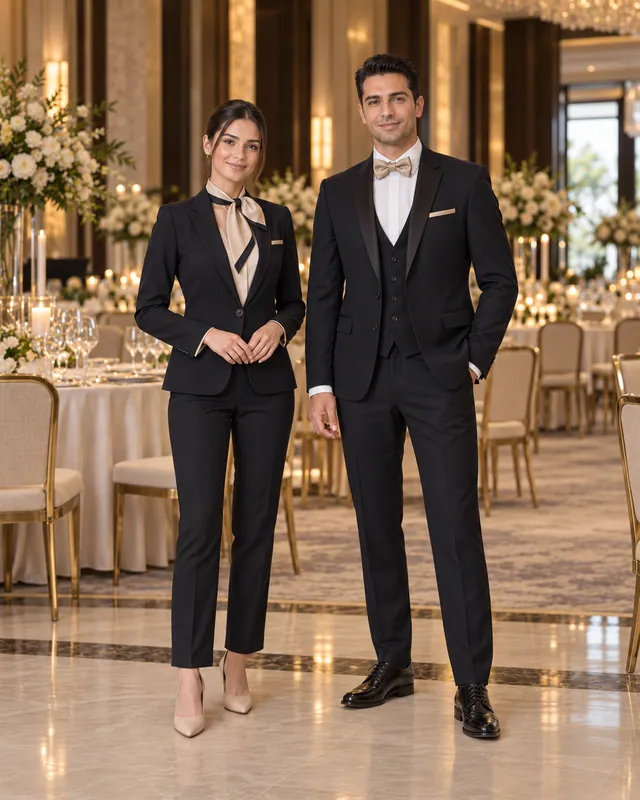
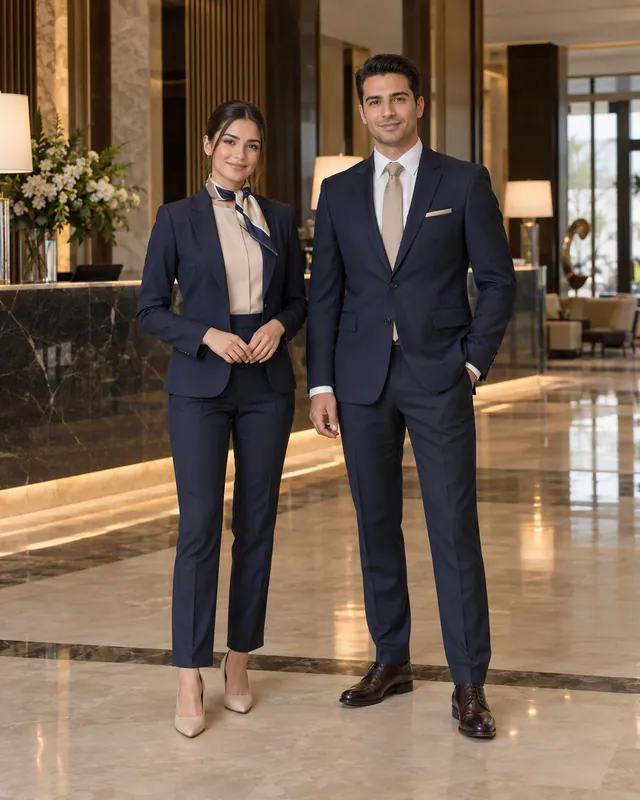
- For women: blazer, tailored trousers or pencil skirt, bow-collar or mandarin-collar blouse
- For men: suit jacket, tailored trousers, shirt and an optional suit vest
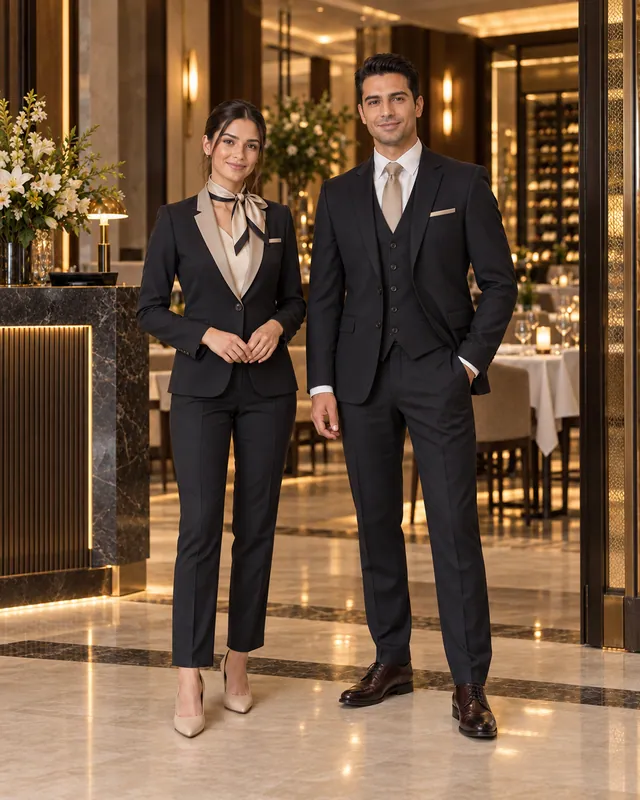
- Accessories: corporate scarf and tie for a department-specific color accent
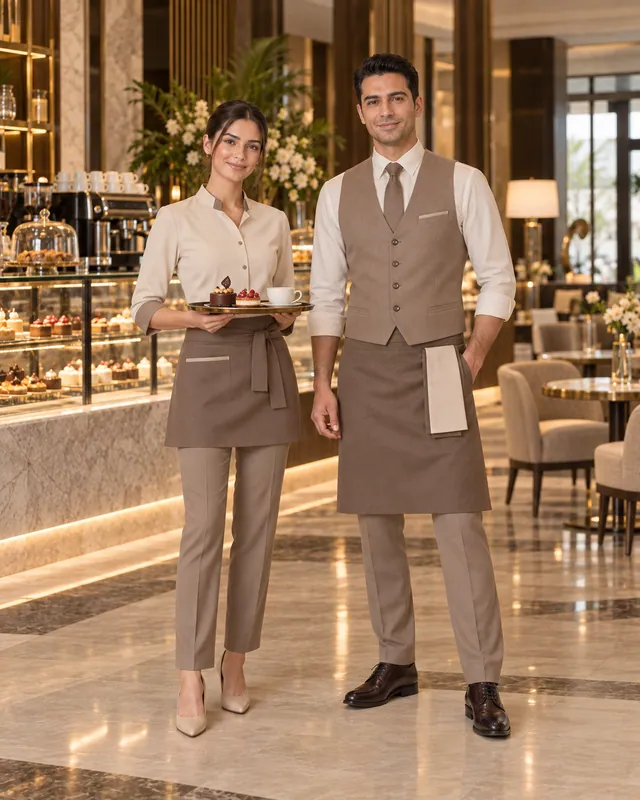
- For hot days and the night shift: a lighter combination with a vest instead of a jacket
Color and accessories: the department’s visual code
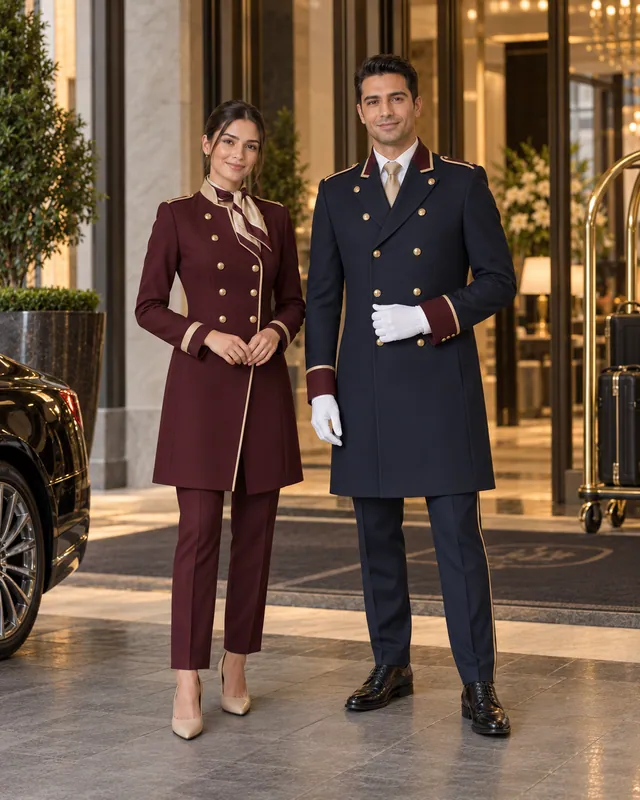
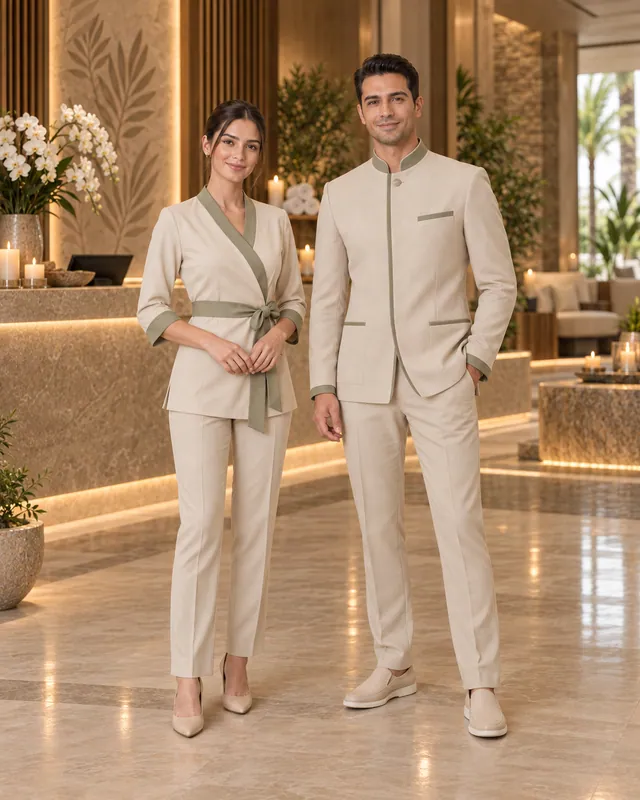
Front office attire is the uniform that carries the hotel’s color language most visibly. Classic shades such as navy, charcoal, black and beige are frequently chosen because they adapt easily to different lobby designs and offer timeless professionalism. If your corporate color is a bolder shade, using it in accessories rather than the main fabric often gives a more balanced result.
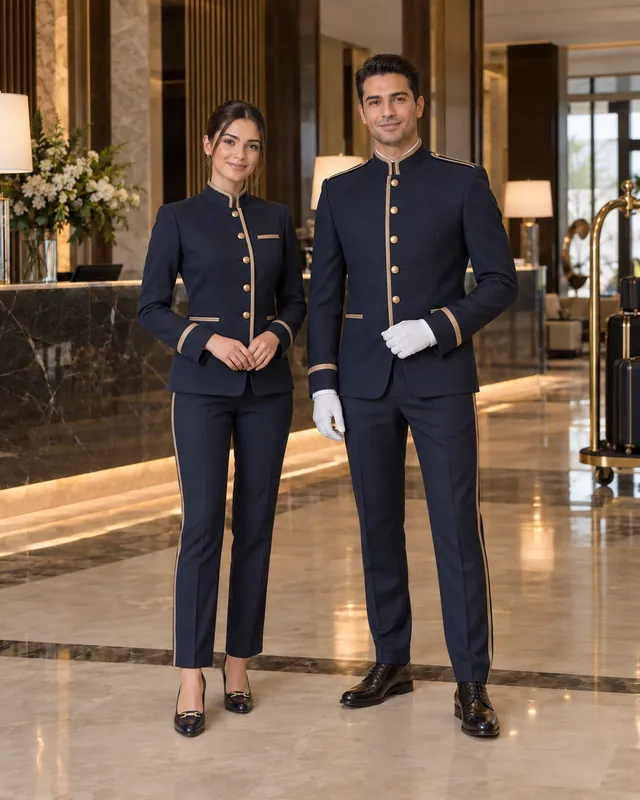
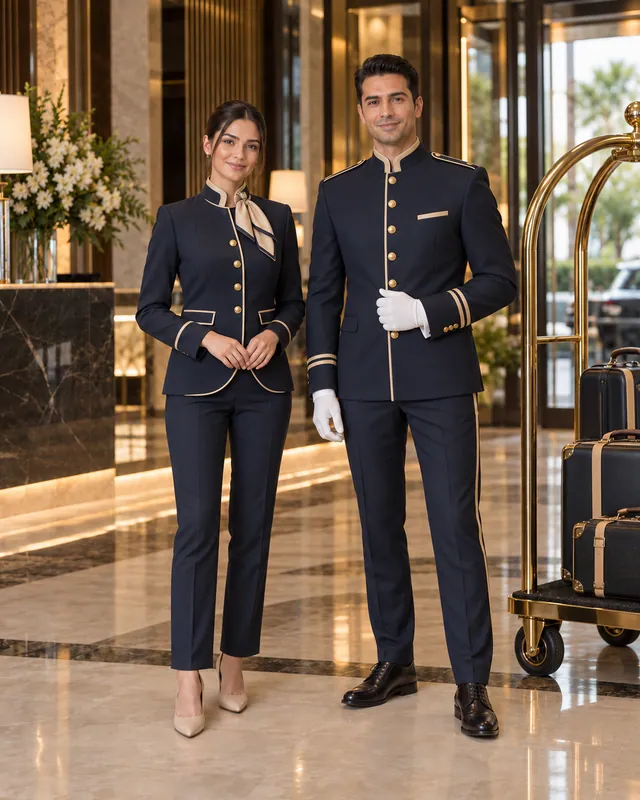
This is exactly where scarves and ties come in. A corporate scarf and tie create a strong brand signal on a small surface, while also serving as a distinguishing color code between departments. For example, when the reception team’s scarf is one color and the guest relations team’s is another shade, guests can easily find the right person. Details such as contrast piping and custom buttons work the same way, creating a department-specific signature without changing the main outfit.
Another advantage of accessories is flexibility. For a new season, a special event or a brand refresh, updating only the scarf or tie color rather than replacing the entire uniform is a practical way to refresh the look. That’s why accessory design deserves as much careful planning as the main outfit.
Comfort on long shifts
The reception team often works on their feet for hours, constantly on the move between check-in rushes, phone traffic and guest requests. That’s why comfort matters as much as appearance in front desk uniforms. A jacket that doesn’t restrict arm movement, trousers that stay comfortable when sitting down and standing up, and fabric that still looks sharp at the end of the day all directly affect how staff feel. Easy care is part of daily comfort too; fabrics that hold their shape after washing and need little ironing make life easier for both staff and the laundry team.
In hot climates like Antalya, an air-conditioned lobby doesn’t mean the team won’t face different temperatures during the day; transitions between the entrance, the car park and outdoor areas must be taken into account as well. Breathable, wrinkle-resistant fabrics, a set suited to layering and a jacket-free or vest-based option for the summer months help strike this balance. Choosing fabric from a swatch card and trying it in a sample is the best way to validate decisions made on paper against real-world use.
Distinguishing the night shift and management
The night shift runs at a different pace from the day and often has a smaller team. Because the night team usually also handles extra tasks such as end-of-day procedures and preparations for the next day, comfortable, practical clothing is a natural requirement of the job. Some hotels choose a jacket-free, vest-based or simpler set for the night team; this increases comfort during the long, quiet hours while preserving a formal look. What matters is that the night team stays within the same color and brand family; a guest checking in late at night should see the same standard of welcome.
For the front office manager, shift supervisors and reception leads, a subtle differentiation quietly communicates hierarchy to guests. This can be achieved with a different jacket shade, the use of a vest, a different tie or scarf pattern, or a more pronounced tailoring detail. Keeping the difference understated is important to preserve team cohesion; the goal is not a separate dress language but a more refined interpretation of the same one.
Coordinating with guest relations and the concierge
The front office doesn’t work alone in the lobby. Guest relations, concierge and bell teams share the same space and, in the guest’s eyes, form a single welcome experience. These teams’ uniforms don’t have to be copies of one another, but they should draw on the same color palette, similar fabric textures and a shared design language.
A practical approach is to treat the front office as the lobby’s main reference and position the other teams around it: a softer shade or a different scarf color for guest relations, and more distinctive details such as piping and buttons for the concierge and bell team. That way each department visually expresses its own role while the lobby looks harmonious as a whole.
To plan this harmony from the start, we recommend handling the front office and lobby teams as a single project. Begin by exploring our Front Office Collection, then add your chosen pieces to your quote list along with your size-by-quantity breakdown, corporate colors and embroidery preferences.
Frequently asked questions
Which colors are most popular for front desk uniforms?
Classic shades such as navy, charcoal, black and beige are frequently chosen because they adapt easily to different lobby designs. You can then bring out your corporate color through details such as scarves, ties or contrast piping.
Should female reception staff wear skirts or trousers?
Offering both in the same fabric and color family is the most flexible solution. Staff can choose according to their own comfort while the team’s cohesive look is preserved.
Is a separate uniform needed for the night shift?
It isn’t mandatory, but many hotels choose a jacket-free, vest-based or simpler set for the night team. What matters is that this set stays within the same color and brand family as the day team.
How should the logo be used on front office uniforms?
On reception jackets, logo embroidery is usually applied on the left chest at a small, elegant scale. Name embroidery or a name badge can also be added so guests can address staff by name.